For an A-line wedding dress, the waist and the point where the skirt begins should match the intended cut and remain comfortable during movement. A horizontal seam at the natural waist is one option; higher-set or continuous constructions create different proportions.
It is important to distinguish between the actual seam, the visually narrowest point, and the point where the skirt begins to widen. These three points may coincide, but they do not have to. This is exactly where a careful comparison is worthwhile when making your selection.
The essentials at a glance
| Waist seam | Look for the actual transition between the bodice and the skirt. |
| Visual waist | Belts and lace motifs can create a different focal point. |
| Skirt starting point | Check where pleats or flared panels visibly begin. |
| Fit | Assess the bodice length and fit together while moving. |
Rule of thumb: Mark three points mentally: the waist seam, the visually narrowest point, and the point where the skirt begins to widen. Then check while standing, sitting, and walking whether the chosen construction remains comfortable.
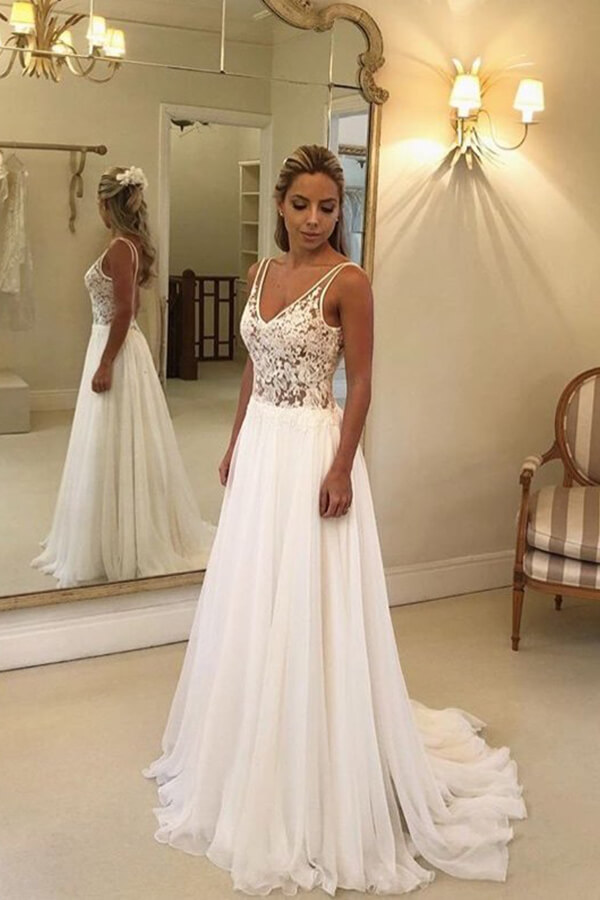
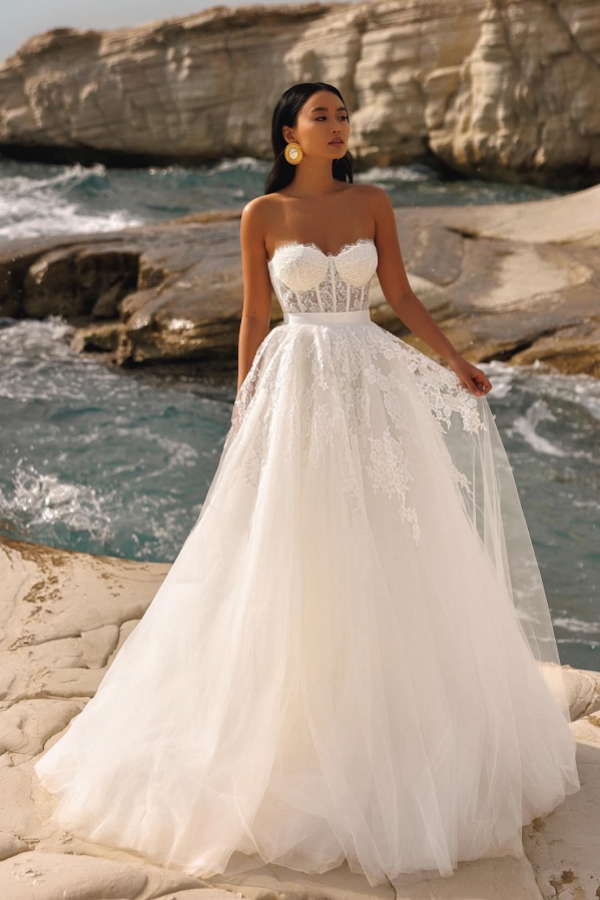
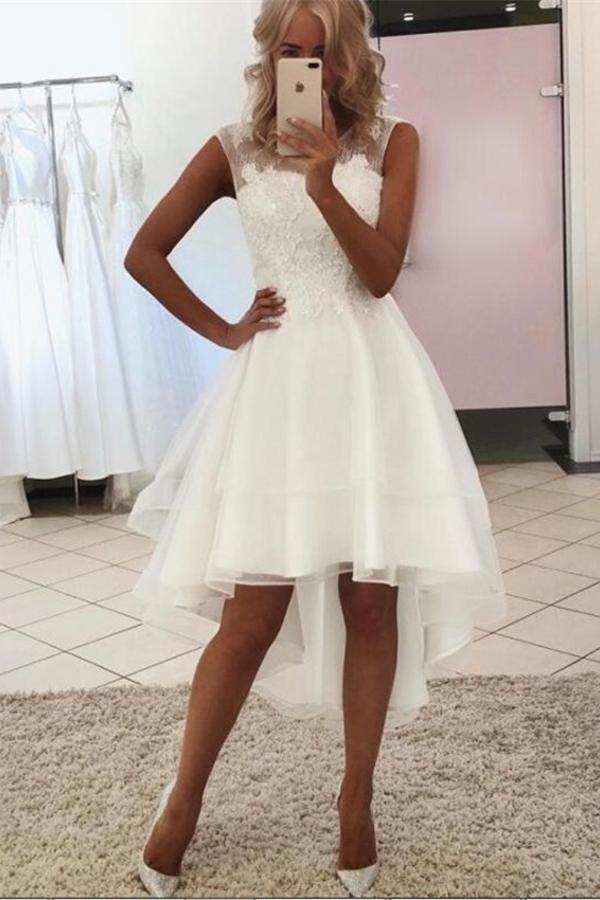
Where does the skirt begin to widen on an A-line dress?
Find the seam independently of the pattern
First, follow the connection between the bodice and the skirt. A clearly visible horizontal seam makes this easy. If lace extends across the transition, also check the back and side rather than mistaking the lower edge of a motif for the seam.
A belt does not have to lie on the structural waist seam either. It can emphasize a point without joining two pattern pieces there. When assessing the shape, you should therefore note whether you can see a seam or merely a decorative boundary.
If the transition remains hidden in the images, that is information that is not available. You do not have to infer it from the model name. The term A-line primarily describes a silhouette that widens toward the bottom, not necessarily a specific seam position.
Separate the beginning of the fullness from the waist seam
A skirt may become noticeably fuller directly below the seam or develop its fullness gradually. Look at the outer contour from the bodice downward. What matters is where the line visibly moves outward and how evenly it opens toward the hem.
Pleats gather fabric at their starting point and release it below. Flared panels can distribute the fullness differently. Both versions can be A-line styles, even though the area immediately below the waist looks different.
Therefore, do not compare two similar styles only at the hem. A similarly wide hem can result from different skirt constructions. Also look at the upper third of the skirt; this often reveals more clearly which line you personally prefer.
Recognize continuous lines as a separate solution
Some constructions run shaping seams lengthwise through the dress. In that case, a narrow center is visible without being interrupted by a dominant horizontal seam. Look for the waist emphasis in the course of the overall contour.
A continuous line can also be created by appliqués or an uninterrupted expanse of fabric. This initially describes the appearance. Separately check which seams are actually visible and whether an overlying pattern merely makes the construction less noticeable.
Decide whether you want a clearly marked center or a flowing transition. Neither solution is fundamentally right for all brides. This choice determines how distinctly the bodice and skirt are perceived as separate areas.
How does the waist height change the proportions?
Compare a clearly defined center
A distinctly marked center visibly organizes the dress into a bodice and skirt. Whether you like this impression also depends on the neckline and skirt fullness. Therefore, view the transition as part of the entire dress rather than as a highly enlarged detail.
During a fitting, check whether the intended line lies smoothly in your normal posture. You should not have to pull your shoulders unusually back or stretch your upper body for the seam to look balanced. Your natural posture is the more useful starting point.
A decorative belt can emphasize the center more strongly, but it does not automatically change the fit of the bodice. If something pulls or bunches, the cause should be checked in the cut. An additional detail will not correct an unsuitable bodice length by itself.
Weigh higher- and lower-set transitions
A higher transition makes the visible skirt begin earlier and changes the relationship between the bodice and skirt. A lower transition, by contrast, lengthens the visible upper section. These are design options, not universal rules for particular body shapes.
Distinguish a deliberately higher cut line from a seam that is pulled upward during movement. The first is part of the design; the second is a reason to check the fit. A single image cannot reliably distinguish between these two situations.
Whenever possible, compare similar necklines and skirt widths when assessing the waist height. If all features change at the same time, it remains unclear what actually makes the proportions look different. A step-by-step comparison will make your preference clearer.
Read lace, belts, and pleats as visual guides
The visual waist can differ from the actual seam. A darker belt, a dense lace area, or motifs placed at the sides can draw the eye to a particular area. Note this emphasis separately from the structural connection.
Observe whether lace motifs trail downward across the seam. This can make a clear cut transition appear softer. Large pleats directly below create a different accent because the growing skirt fullness visibly begins at that point.
If you like a style mainly because of its proportions, identify the reason as precisely as possible. Is it the height of the center, the narrow belt, or the clean upper skirt? This will make it easier to find an alternative if another detail does not suit your preferences.
How can you tell whether the transition fits comfortably?
Consider the bodice length and closure together
Pay attention to how the bodice lies between the shoulders or neckline and the waist. If fabric bunches above the seam or the transition pulls upward, a closer examination is advisable. However, a single sign cannot reliably determine the cause.
Look at the back and closure at the same time. A waist that looks smooth at the front may fit differently at the back. Check the line all the way around instead of smoothing only the front; the transition is part of the overall construction and should also be assessed in your usual posture.
Hohenstein takes lengths, widths, and freedom of movement into account when assessing fit. That is precisely why an attractive view of the waist alone is not sufficient for evaluation.
Observe the skirt starting point while sitting and walking
During a fitting, sit down fully, stand up again, and walk a few steps. Then observe the position of the waist. A transition that you want to push back into place after every movement deserves a closer look at the overall fit.
Also pay attention to whether pleats can be opened comfortably or whether fabric gathers uncomfortably in one area. The A-line offers visible skirt fullness, but freedom of movement also depends on the understructure and how the dress fits above it. A full hem does not answer every fit-related question.
Check your movements without constantly holding onto the skirt. Naturally, you can lift the hem for a step, but the basic assessment should take place in a normal posture. Otherwise, you are primarily assessing the shape of the dress as you hold it.
Clarify alteration questions before making a final decision
A waist seam cannot simply be moved on every model. Lace, pleats, closures, and the length of the bodice may be connected to one another. Therefore, do not assume that a desired change to the seam can always be made independently.
If you like the basic cut but the transition appears unsuitable, have the specific construction assessed by a professional. Describe what you observe as precisely as possible: for example, fabric bunching above the seam or the skirt attachment riding up when sitting down.
At the same time, distinguish a fit issue from a design preference. A decorative belt placed differently can change the way the eye is directed, while a different bodice length affects the construction. This distinction makes discussions about possible alterations much more precise.
How should you specifically assess A-lines at babyonlinedress?
Create a small comparison sketch
When selecting A-line wedding dresses from babyonlinedress, start with two or three favorites. For each one, draw a simple vertical line and mark the neckline, visible waist, and beginning of the skirt fullness. An accurate drawing is not necessary.
The sketch records what you can actually see in the images. Next to the waist, note whether a seam, belt, or lace motifs mark the area. This helps you avoid unconsciously treating different details as the same construction solution.
Leave unclear areas marked with a question mark. This is more helpful than replacing the missing view with an assumption. Afterwards, you can immediately see which model already allows you to understand the key proportions.
Compare the views according to their purpose
The front view shows the visible structure, the side view shows the three-dimensional skirt shape, and the back view shows how the closure runs. Use these images one after another. Each view answers a different part of your question about the waist and skirt attachment.
When comparing them, pay attention to the posture of the person shown. A twisted upper body or a skirt panel moved to the side can alter the line. Note which features remain consistent in another image and which may result from the pose.
The following products are starting points for comparing different transitions. A model does not need to have all the details you want at once to provide a useful point of reference. Make a note of which specific construction appeals to you.
Describe your favorite by its construction
Summarize your choice in a factual sentence, such as: clear waistline with a gradually widening skirt or a soft lace transition with visible pleats. Such a description will help you compare your favorite with other A-line styles later.
Then check whether the visible design also meets your practical preferences. Do you want a clearly defined waist, or should the transition be as subtle as possible? This decision is more personal and precise than a general recommendation based on a body category.
A well-balanced A-line wedding dress combines clear proportions with a comfortable fit. The waist seam does not have to be located in the same place on every model. What matters is that the intended construction suits the line you want and performs well in motion.
Matching dresses from our shop
Wedding dress with lace flowers – with a plunging neckline.
Boho A-line wedding dress – with a lace bodice.
Satin A-line wedding dress – with a full skirt.


Lace A-line wedding dress – with a flared skirt.
Chiffon wedding dress – with a lace bodice.
A-line wedding dress with sleeves – with a lace bodice.


Find the complete selection under A-line wedding dresses.
Find the complete range at Babyonlinedress.de.
If you would like to compare the A-line with greater skirt volume, the article on the princess wedding dress will help you distinguish between the styles.
Frequently asked questions
How can I recognize an A-line without a horizontal waist seam?
Continuous shaping lines can also create an A-line that widens toward the bottom. The silhouette designation does not automatically determine where a visible seam must run.
Why don’t the belt and waist seam always sit at the same height?
A belt can visually emphasize an area without joining pattern pieces there. The decorative visual effect and the actual construction should therefore be assessed separately.
How does a higher skirt attachment affect the overall look?
A higher transition makes the visible skirt begin earlier. This changes the perceived proportion between the bodice and the skirt, even if the basic silhouette remains similar.
What should I check if the waist moves upward when I sit down?
Take a closer look at the bodice length, closure, and overall fit. A transition that rides up cannot be explained solely by the skirt width or a single pleat.
What determines whether a waist seam can be repositioned?
The possibility depends on the construction and must be professionally assessed for the specific dress. Lace, pleats, the closure, and the bodice length may be connected in such a way that changing one area affects others.
Where can I compare different A-line styles?
Start with the A-line wedding dresses from babyonlinedress and compare two or three favorites. For each one, mark the visible waist, the actual seam, and where the skirt begins to flare.
About the Author
Lisa Müller writes the babyonlinedress guides on bridalwear, eveningwear, and fit. She explains how cut, fabric, and visible details work together when choosing a dress.