The bodice of a wedding dress sits securely when the shoulders, bust area, waist, and closure fit together as a whole. Individual tight spots are not proof of support. Therefore, check where the dress rests against your body, how it follows your movements, and whether it settles back into place afterward.
There is no single cut rule for plus-size wedding dresses. A particular neckline or wide straps may appeal to you, but they do not replace checking the specific design. Use your measurements and follow a set sequence instead of reducing your choice to a size label.
The essentials at a glance
| Shoulders | Consider support and freedom of movement together. |
| Bust area | Check the contour, seam placement, and neckline without pressure. |
| Waist | Observe the intended line in a natural posture. |
| Overall interaction | Move your arms, sit down, and check the fit again. |
Rule of thumb: Check 4 areas separately and then together: shoulders, bust area, waist, and closure.
Where should the bodice rest calmly?
Look at the shoulder line without additional tension
Start in a relaxed posture and let your arms hang loosely. Check where the straps or shoulder area rest. A section should not appear secure only because you consciously pull your shoulders back or hold your upper body unusually straight.
Wider straps may provide different support from narrow ones, but width alone does not determine the fit. The attachment point, length, and connection to the bodice also play a role. Therefore, observe whether the visible line shifts noticeably with a small movement.
Consider the waist position separately
The waist creates a clear transition to the skirt in many dresses. Check whether the intended line rests comfortably in place. It does not have to sit at a theoretically ideal position, but should suit your body, the cut, and the silhouette you want.
A more fitted waist can affect the impression of stability, but it must not be confused with uncomfortable pressure. Also sit down later. Only then can you see whether the seam placement still works with a changed posture and whether the bodice remains secure.
Understand the closure as part of the overall fit
A closure connects the intended edges of the bodice. Its form alone does not indicate how much ease a particular design offers. Therefore, check the fit when closed and the adjacent fabric panels instead of inferring arbitrary adjustability from a photo.
Pay particular attention to whether the fabric beside the closure lies evenly or is pulled strongly toward one spot. An edge should not look right only in a particular photo pose. The side view and your natural posture are therefore always part of the assessment.
How do you check the bust area and neckline together?
Compare the contour with the seam placement
First, look at the shape of the bodice without adjusting the neckline. Seams, panels, and any visible inserts should correspond to the intended fit. However, a decorative line does not automatically explain how a design’s internal construction is structured.
Check the contour from the front and slightly from the side. Noticeable gaps or strong tension deserve a second look. Both can have different causes. The solution therefore cannot be reduced across the board to a larger or smaller clothing size.
Observe gaping deliberately
Slowly move your arms forward and then return to the starting position. Observe whether the neckline edge moves with you or visibly stands away from your body. A single movement helps identify the specific area more precisely instead of judging the entire bodice in general terms.
Do not keep pulling the edge back into position with your hand afterward. First, consider the shoulders, sides, and waist together. A change in tension elsewhere can affect how the neckline lies, even if the noticeable opening is the first visible sign.
Include the intended underwear in the comparison
Try on the dress with the underwear intended for its cut and suitable for your plans. Different shapes alter the contour beneath the fabric. Changing underwear during the comparison can therefore change the impression, even though nothing about the dress itself has changed.
The product view does not reliably show which underwear each individual design allows. Pay attention to the neckline, back, and the specific construction details. Neither a photo that makes the dress look firmly fitted nor a visible seam replaces this design-specific check.
Which movements reveal a secure fit?
Move your arms without holding the edge in place
Raise your arms within a range that feels comfortable to you, then lower them again. The bodice may move with you. Afterwards, check whether it returns to its intended position or whether you need to readjust the straps, neckline, and waist.
A large movement is not a competition for the perfect photo pose. Choose movements that are part of your actual day. The calm return to the starting position in particular shows whether the individual sections work together or shift against one another after every change.
Pay attention to the lower edge while seated
Sit on a normal chair and initially let the skirt fall naturally. Check whether the bodice rides up or whether a lower edge rests uncomfortably. The connection between the bodice and skirt is often more apparent in this position than when standing.
Then stand up again without pulling the dress up first. Notice which area changes position first. A stable shoulder line is of little help if the entire bust area is pushed upward. Therefore, look at the sections again as one connected dress.
Check the back view after moving
Use a second mirror or a recording to see the back after moving as well. Do not look only at the closure itself. The adjacent fabric panels and waistline also show whether the tension has changed or an area has shifted permanently.
For the fit assessment, consider Hohenstein lengths, widths, and freedom of movement. For your fitting, this means assessing the front and back together instead of equating a single tightly fitting edge with stability.
Which upper silhouette will you consciously choose at babyonlinedress?
Define your desired focus for the bodice
When considering babyonlinedress plus-size wedding dresses, begin with your design priority: Should the shoulder line be clearly defined, should the neckline guide the eye, or should the transition to the waist appear understated? The size designation does not determine this preference.
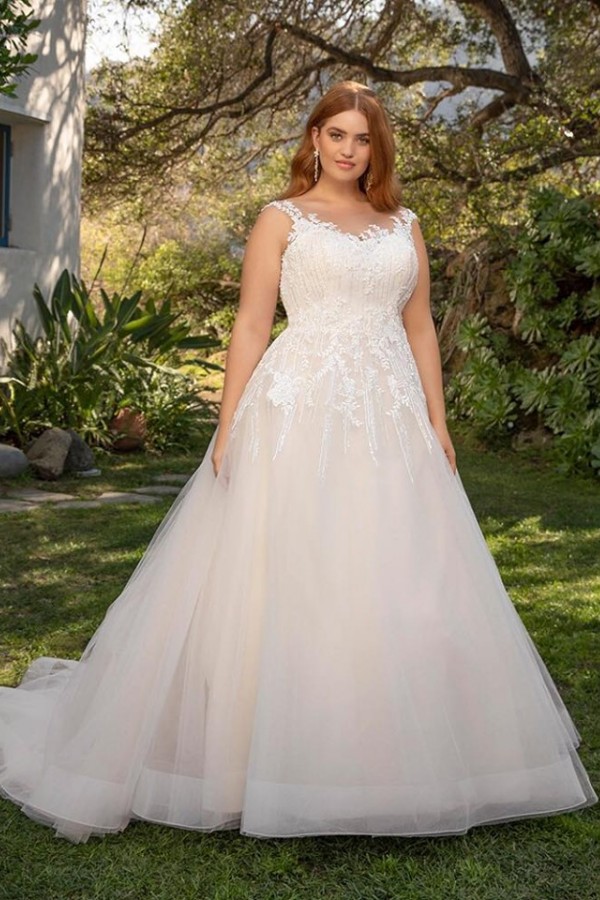
The styles shown can illustrate different visible solutions. First choose the focal point that matches your style, then check its specific fit. A more heavily embellished area is not general evidence of additional internal support.
Weighing shoulder and waist effects against each other
A pronounced upper edge and a clearly emphasized waist can create two focal points at once. If you prefer a calmer upper contour, compare it with a version that defines only one of these areas more strongly. This is a style choice, not a fixed body rule.
Also consider the back view. It may continue the visual emphasis seen from the front or deliberately change it. For your favorite, you should be able to understand how the shoulders, back, and waist work together as a complete bodice, rather than being convinced by just one detail.
Keeping neckline preferences and assumptions about support separate
A more open neckline does not automatically require a specific internal construction; conversely, a more closed design does not prove better support. Consider your preference for coverage or lines separately from the properties that are actually described and personally checked.
This allows you to narrow your selection to a bodice whose visible design you like and whose shoulder, bust, and waist areas you can assess clearly. A blanket recommendation for all plus sizes would be less precise than making this decision based on the specific style.
Matching dresses from our shop
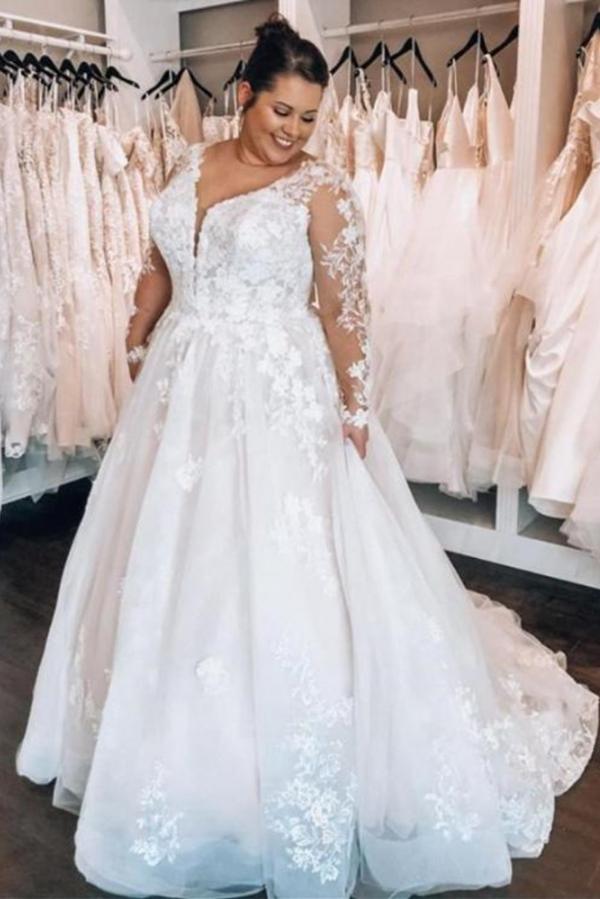
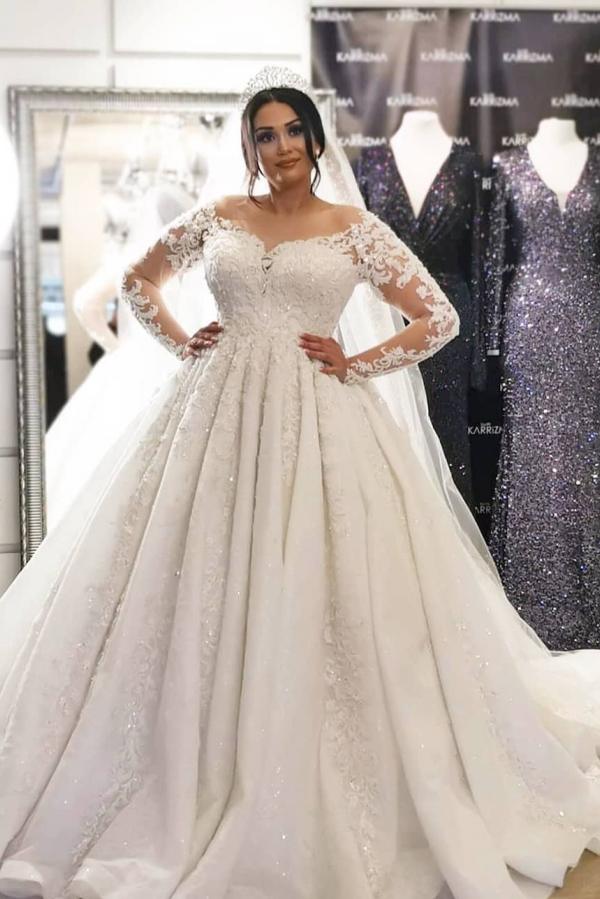
Wedding dress with lace sleeves – Check the shoulder line.
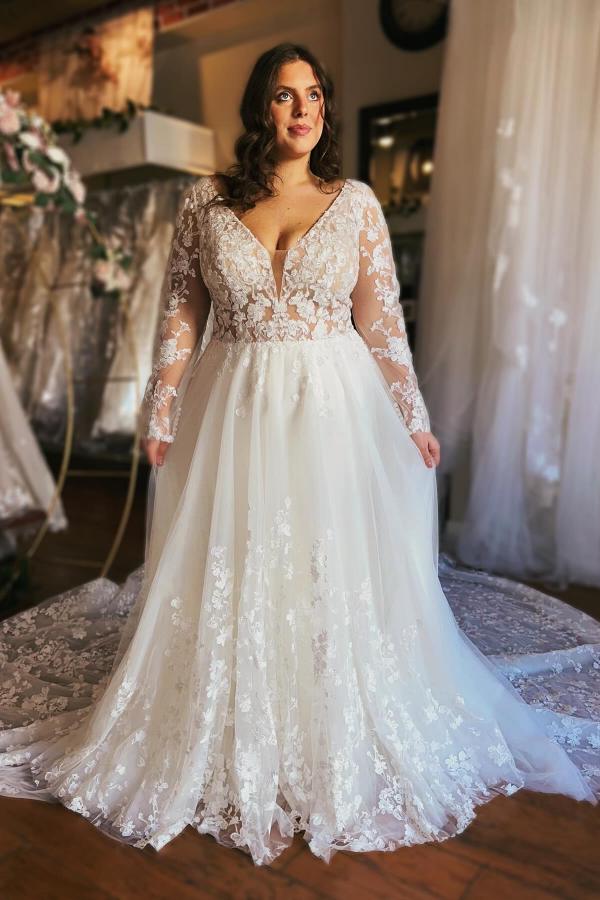
V-neck wedding dress – Take a close look at the neckline.
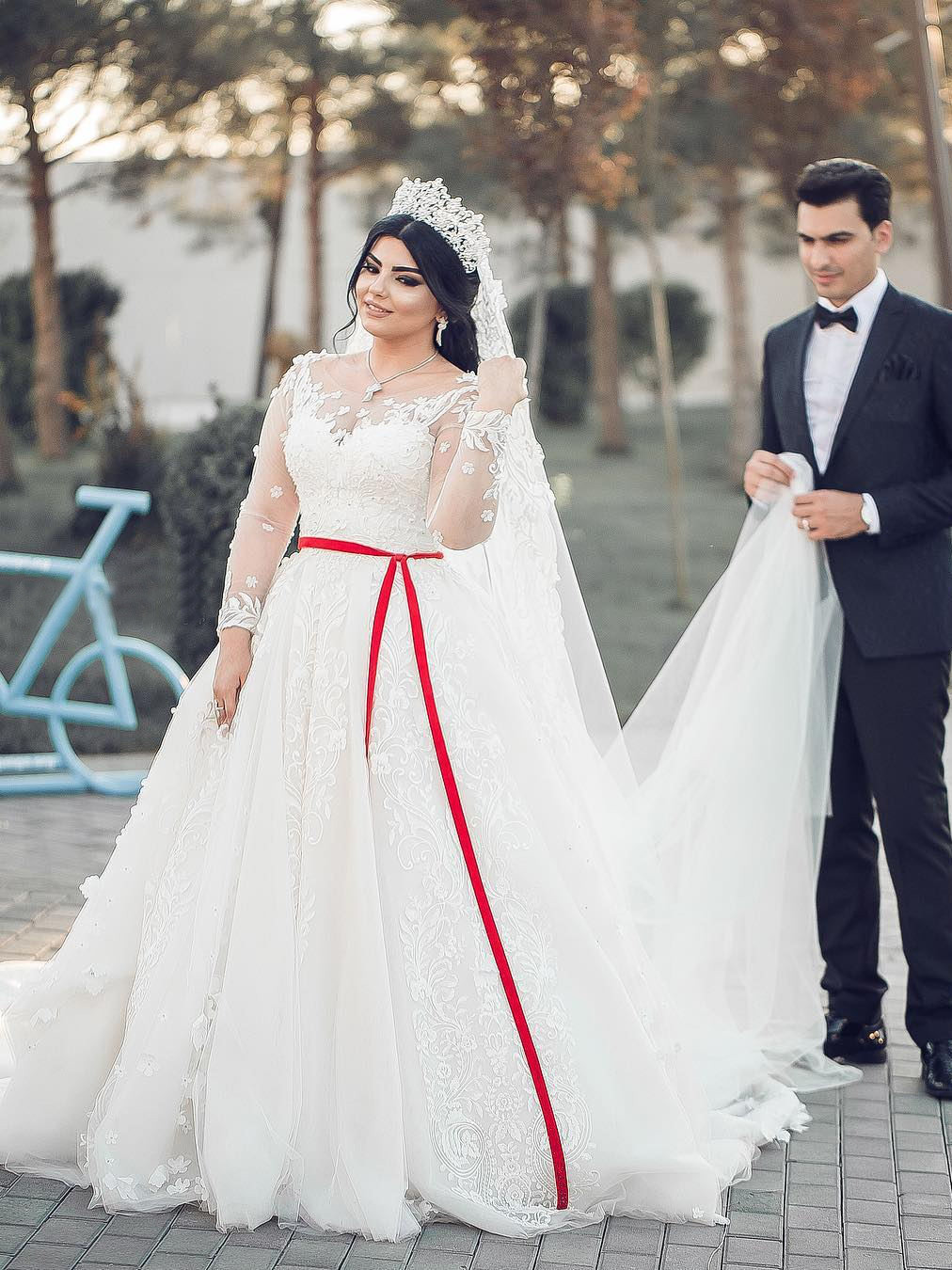
Wedding dress with a train – Compare the waist placement.
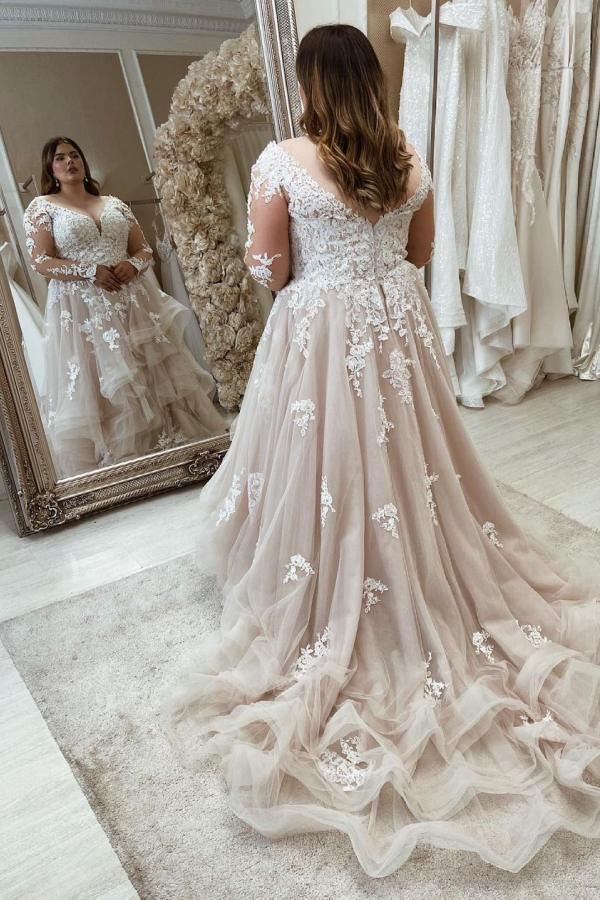
Wedding dress with lace sleeves – Also observe the back shape.
Mermaid wedding dress – Assess the contour as a whole.
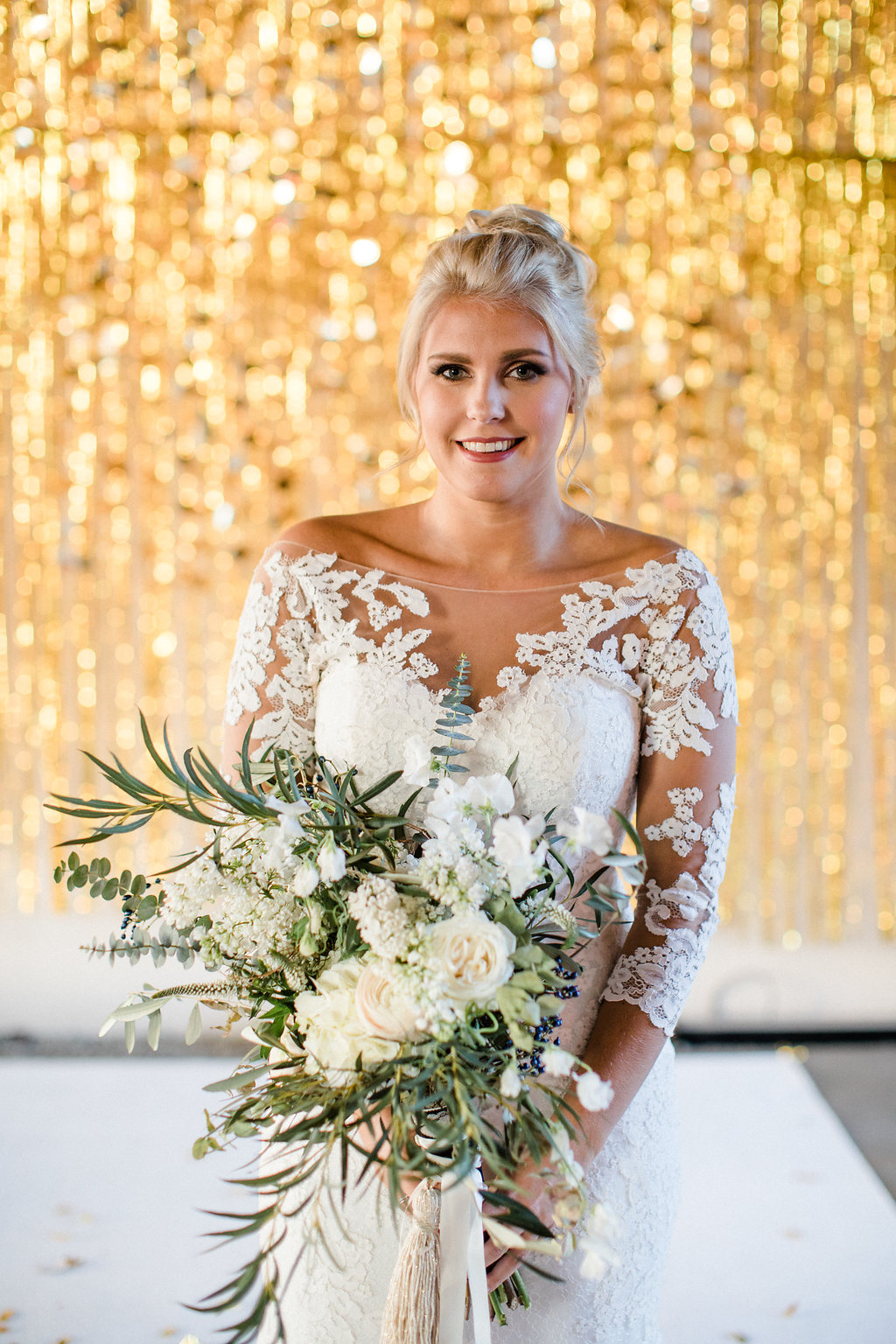
Long-sleeved wedding dress – See how the bodice looks in motion.
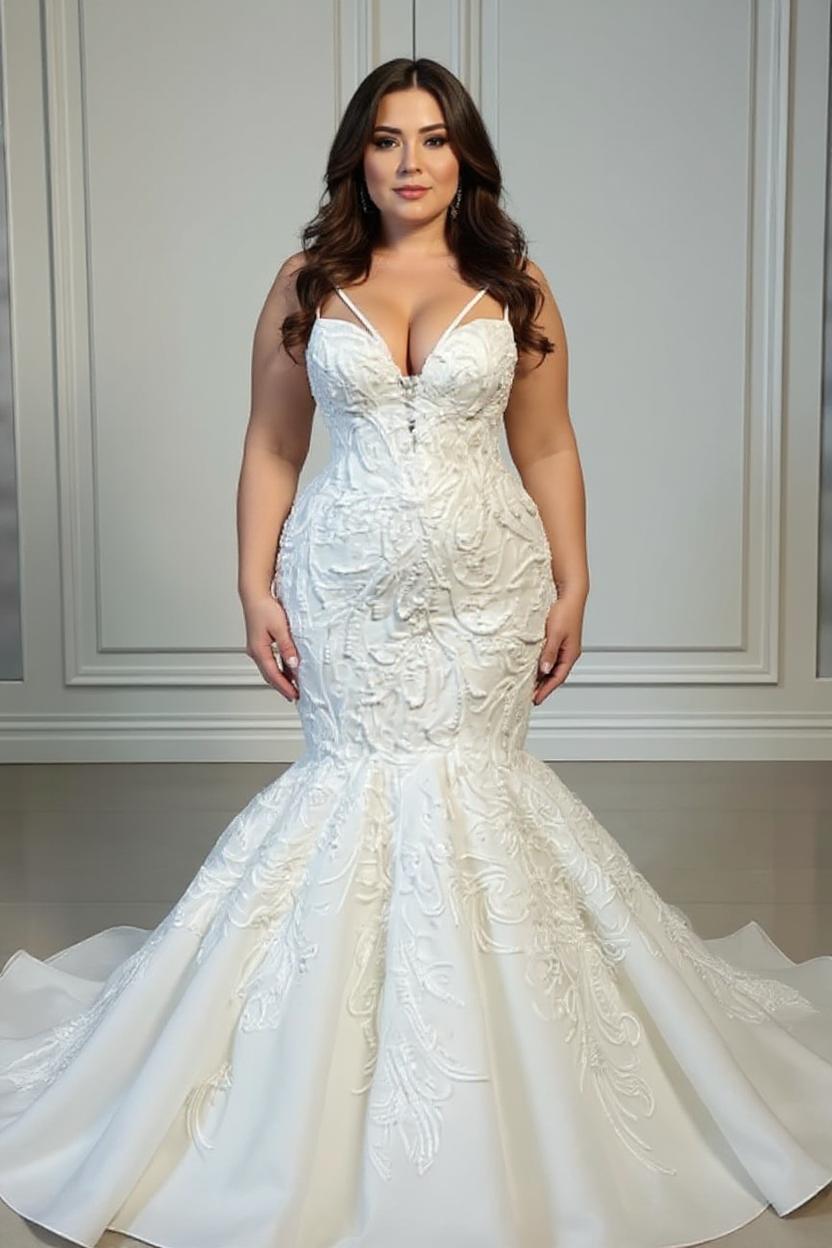
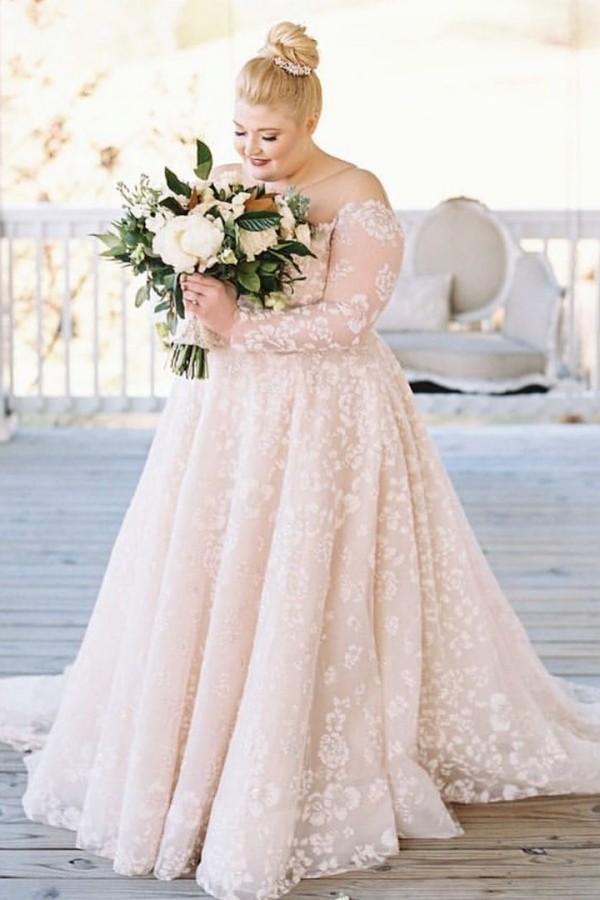
Find the full selection at Plus-size wedding dresses.
Find the complete range at Babyonlinedress.de.
For additional guidance, see the older article on plus-size wedding dresses; for the specific fit, the individual style details remain decisive.
Frequently Asked Questions
Does a supportive bodice need to fit particularly tightly?
A supportive bodice does not need to feel uncomfortably tight. The shoulders, bust area, waist, and closure should work together in their intended positions.
Do wide straps guarantee good support?
Wide straps alone do not guarantee a proper fit. Their length, placement, and connection to the rest of the bodice must also be right.
Why can a neckline gap when moving?
A change in tension in the bodice can affect the edge of the neckline. Therefore, check the shoulders, sides, and waist before judging just this one edge.
Is a larger size always the right solution?
Simply choosing a larger size does not solve every fit issue. Compare the measurements and construction of the individual style with the specific area you have observed.
What posture is useful for comparison?
Begin in your natural posture and include normal movements. A held photo pose does not show how the dress will behave during the celebration.
Where do you begin when choosing a suitable bridal bodice?
Start with the wedding dresses and compare the shoulders, neckline, and back shape. For each style, also consider its own size chart and the construction described.
About the author
Lisa Müller writes for babyonlinedress about bridal fashion, eveningwear, and fit. Her focus is on making informed decisions about the cut, fabric, and fit of formalwear easy to understand.