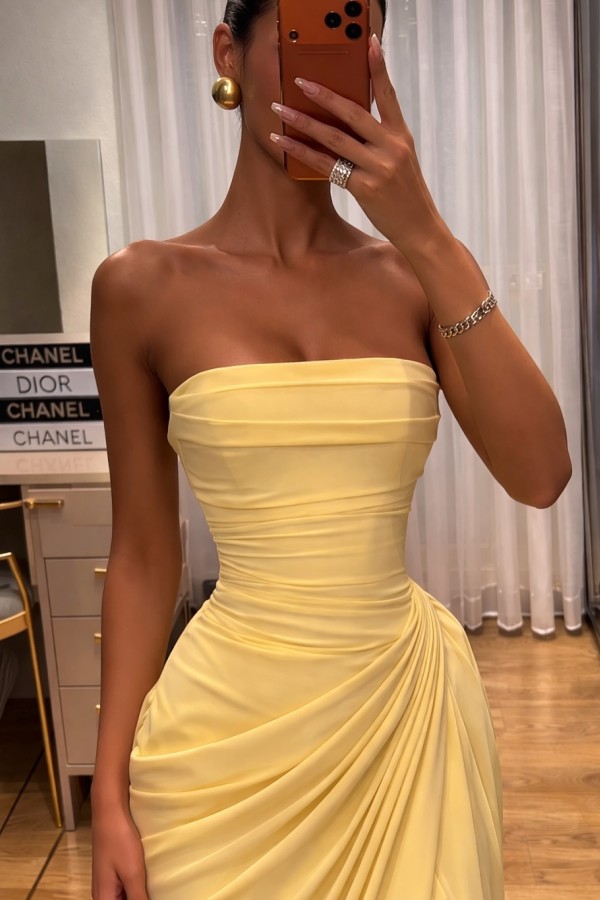
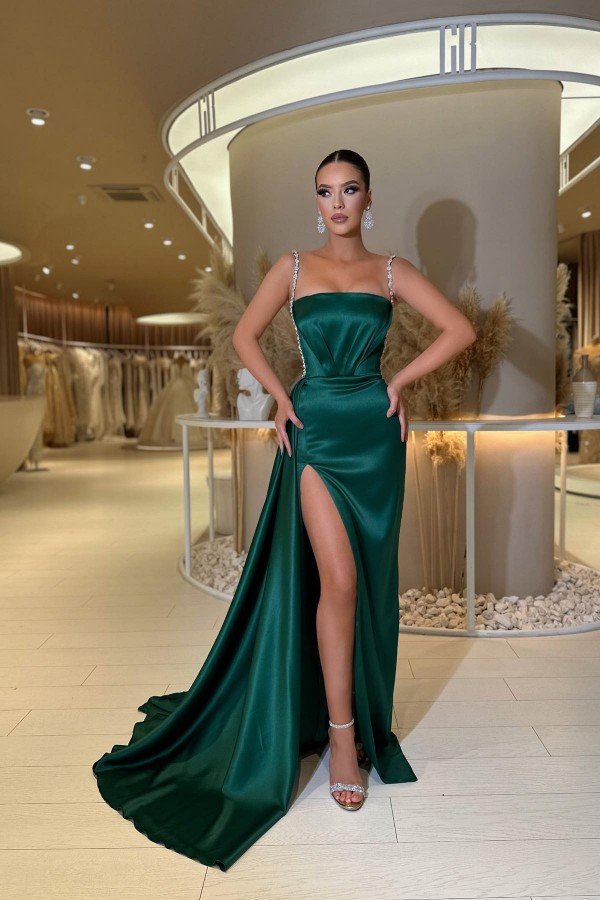
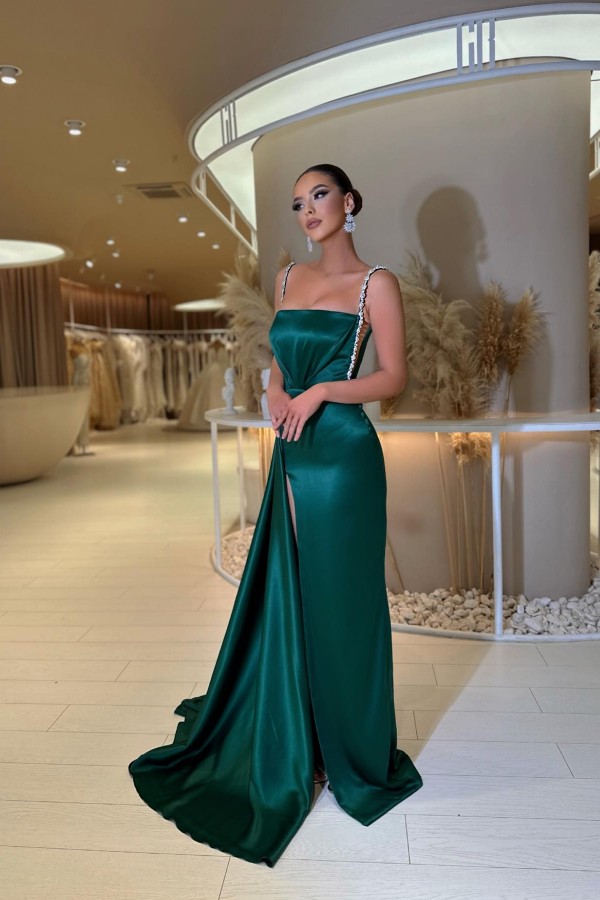
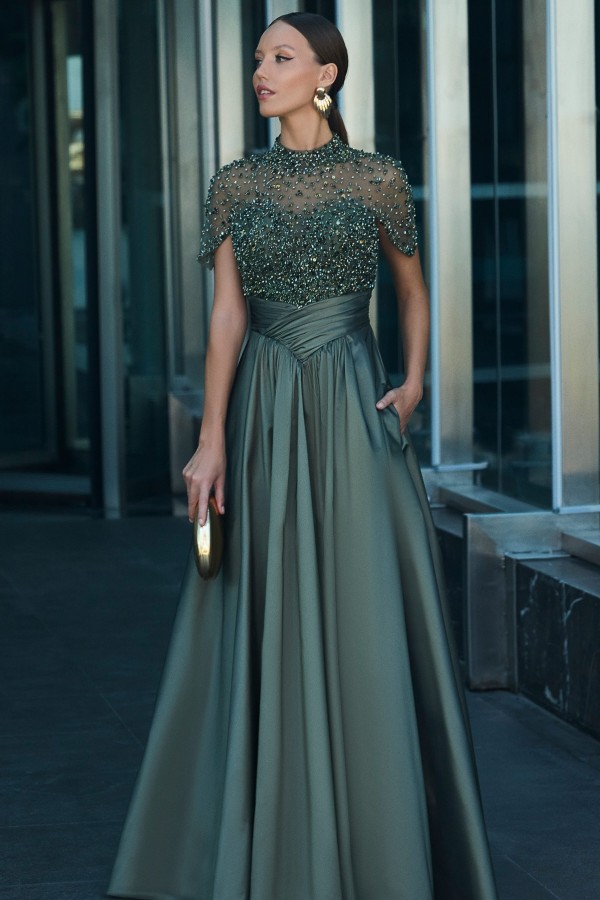
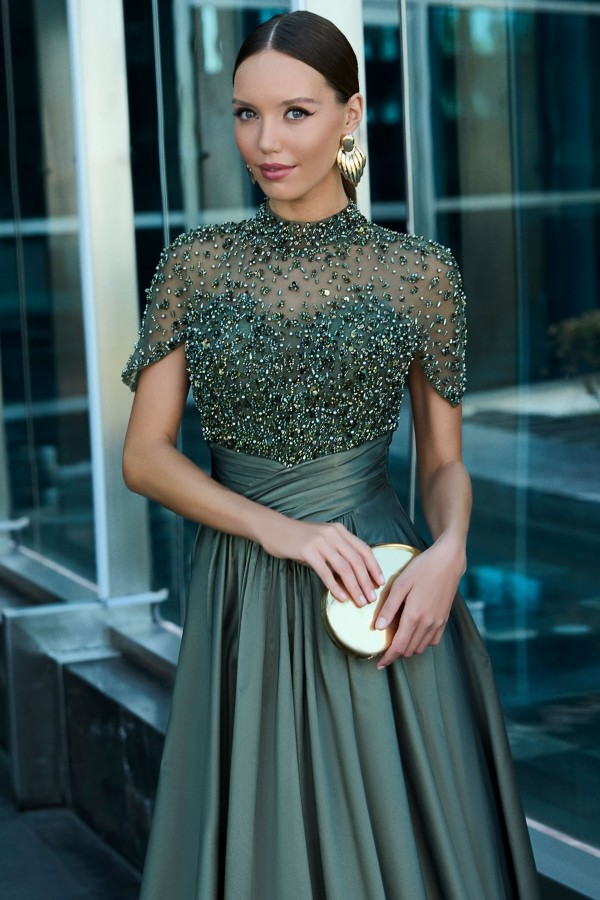
A mother-of-the-bride dress feels comfortable when seated at the table if the waist, hips, and inner skirt layer leave enough room while sitting. A wide outer silhouette alone is not enough. What matters is how each individual area changes when you sit down.
Therefore, compare a straight shape and a flared shape on the same chair. First check the waist area, then the fabric over the hips and thighs, and finally the hem. This will help you identify which specific construction suits your movements.
The most important points at a glance
| Waist | When seated, pay attention to pressure and the position of the seam. |
| Hips | Distinguish drag lines from normal sitting folds. |
| Lining | Check the inner layer independently of the visible skirt. |
| Movement | Sit down, reach forward, and stand up without readjusting the dress. |
Rule of thumb: Compare 3 movements: sit down in a relaxed manner, reach forward toward the table, and stand up again.
What changes at the waist and hips when sitting?
Check the waist seam in a natural posture
When you sit down, your upper-body posture changes. The fabric then lies differently around the middle of your body than it does when standing. Therefore, check whether the intended waistline remains comfortably in place instead of forcing you into an unnaturally upright position.
A clearly defined seam can fit comfortably if its position and ease are right. It is not inherently less comfortable than soft draping. Observe whether pressure develops and whether the bodice moves upward as soon as you lean back normally.
Observe how the fabric falls over the hips
When seated, the skirt spreads across the hips and thighs. Some folds are normal. What matters is whether the fabric can spread freely or whether strong, taut lines appear and continue toward a side seam or fastening.
Smooth the skirt out lightly once, then do not adjust your posture any further. If a particular area remains noticeably taut, check the ease and cut there. Repeatedly pulling at the hem cannot compensate for a good fit and often only conceals the source of the tension.
Distinguish restriction from simple excess fabric
A full skirt can gather on the chair without feeling restrictive. A narrower skirt can also provide sufficient room if its cut is designed around your movements. Therefore, assess how the dress feels together with how the fabric falls, rather than judging only by the visible amount of fabric.
Also check whether a voluminous fold lies between your body and the backrest. Arrange this layer sensibly once. If the area relaxes afterward, the fabric may simply have been distributed unfavorably. If the area remains under tension, it requires a closer look.
What differences do straight and flared skirts show?
Test the straight line at the thighs and knees
With a straighter skirt shape, the space below the hips is especially important. Place your feet as you normally would while eating. The skirt should allow this position without requiring you to hold your legs unusually close together or out to the side.
Then test taking a small step forward and standing up slowly. A slit can allow movement, but its position and length are crucial. Its mere presence says nothing about how the inner skirt layer or the seam at the hips behaves.
With an A-line, look at where the flare begins
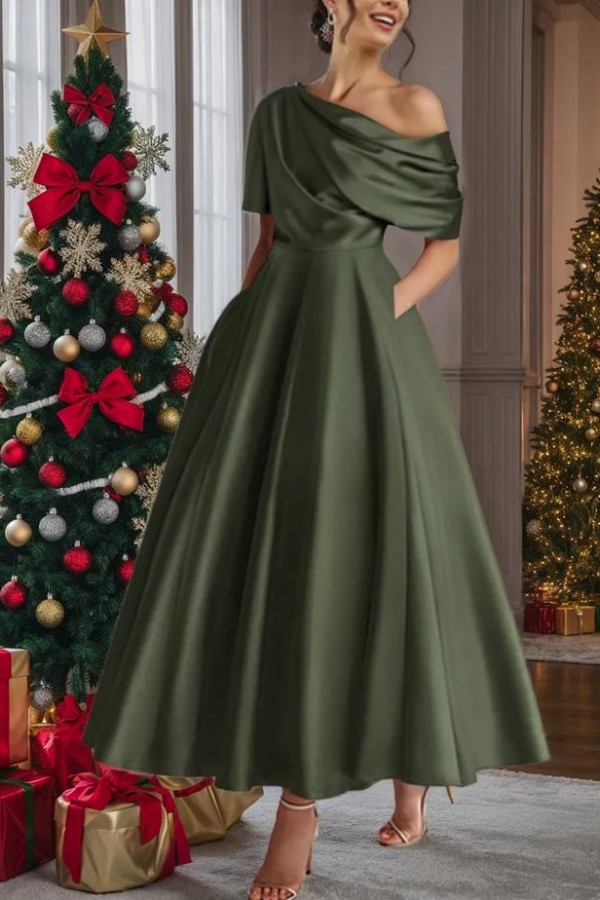
An A-line becomes wider toward the hem, but the flare can begin at different points. Some skirts open immediately below the waist, while others initially follow the hips more closely. This difference affects how the fabric can spread when you sit down.
Therefore, do not look only at the circumference of the lower hem. Look at the first flared section and the position of darts or pleats. More fullness at the bottom is of little help if the area over the thighs is too narrow for your usual sitting posture.
Check the actual function of the draping
Draping can arrange the fabric softly or visually emphasize a particular area. However, it does not prove that there is more room for movement underneath. Carefully feel whether the visible layers lie freely or are held against a firm underlying layer.
For fit assessment, Hohenstein considers lengths, widths, and freedom of movement. This is also a helpful perspective here: Check the actual fit beneath the draping, not just the decorative surface.
How do you check the lining and hem at the table?
Observe the inner layer when sitting down
A softly draping outer fabric can lie over a narrower underlayer. Observe which layer creates resistance first. If you feel tension inside while the outer skirt remains loose, do not look for the cause only in the visible silhouette.
A smooth underlayer should be able to redistribute itself properly after you stand up. Check whether it remains pulled upward or bunches in a particular area. The fit can be assessed more reliably when the inner layers are not overlooked.
Test the front edge with the shoes you plan to wear
Sit down wearing the shoes intended for the celebration. The hem changes position when your knees are bent. Then test standing up without first pulling your feet far back or holding the skirt with one hand.
With a longer skirt shape, pay particular attention to whether an edge gets caught under the sole of your shoe. With shorter styles, consider the desired coverage while seated. Both depend on the specific cut and cannot be determined from a standing photo alone.
Include reaching toward the table in the comparison
Carefully reach forward with both arms as if you were picking something up from the table. This changes your posture again. Check whether tension develops at the skirt attachment, whether the waistline presses uncomfortably, or whether the dress moves calmly with you.
Then return to your starting posture. The dress does not need to look perfectly smooth every second. After an everyday movement, it should settle comfortably again without requiring you to constantly readjust individual areas.
Which skirt style should you choose at babyonlinedress for comfortable sitting?
Start with your personally preferred sitting posture
With babyonlinedress mother-of-the-bride dresses, you can compare straight and flared silhouettes based on your preferred sitting posture. Would you rather keep the skirt close to your body or let it spread slightly when you sit down? This preference is a useful starting point.
A larger visible amount of fabric is neither automatically more comfortable nor inherently bothersome. What matters is where that fabric is available to you. Check your favorite dress to see whether the desired sitting posture works with the specific inner and outer skirt shape.
Choose waist emphasis as a design element, independently of tightness
A clearly defined waist can be part of your style without requiring a close fit there. Therefore, separate the visible accent created by a band, seam, or draping from your personal comfort at this point. A photo primarily answers the design question.
For this decision, also compare a more understated waist treatment. If you like its proportions just as much, stronger emphasis does not have to be a requirement. Choose the shape whose desired silhouette can be combined with how you actually feel when sitting.
Coordinate the lower skirt for sitting down and standing up
Also consider the suggested styles based on how you want to handle the lower skirt. A narrower silhouette and a skirt with a wider fall require different movements when sitting down. Practice the process with the shoes intended for the occasion.
For the final selection, the combination of your personal waist placement, sufficient room in the skirt, and a practical hem is what matters. This allows you to evaluate the specific skirt design at the table instead of assuming comfort based on an age group or style name.
Matching dresses from our shop
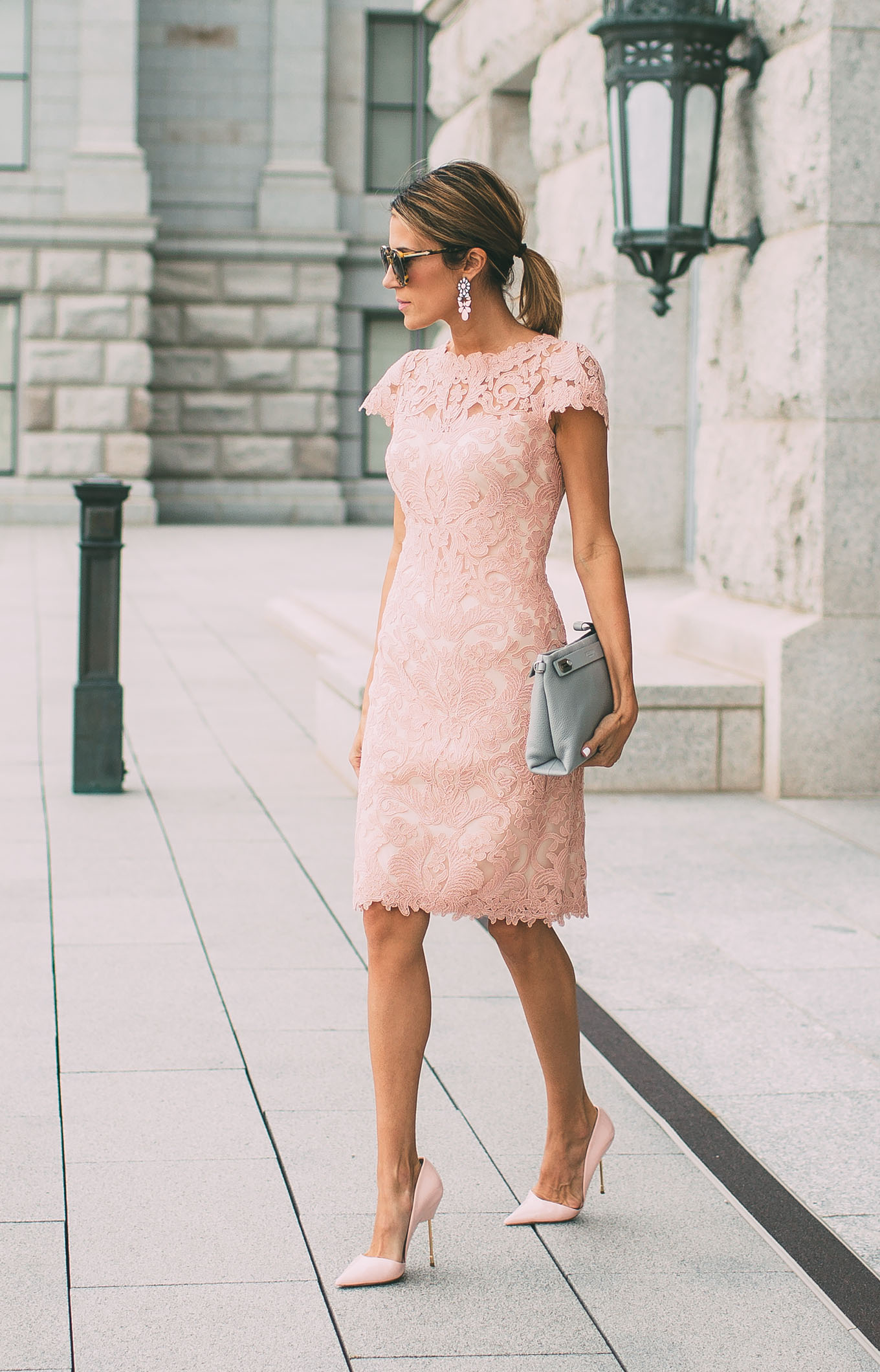
Pink mother-of-the-bride dress – Compare waist placement.
Champagne-colored mother-of-the-bride dress – Check the straight fall.
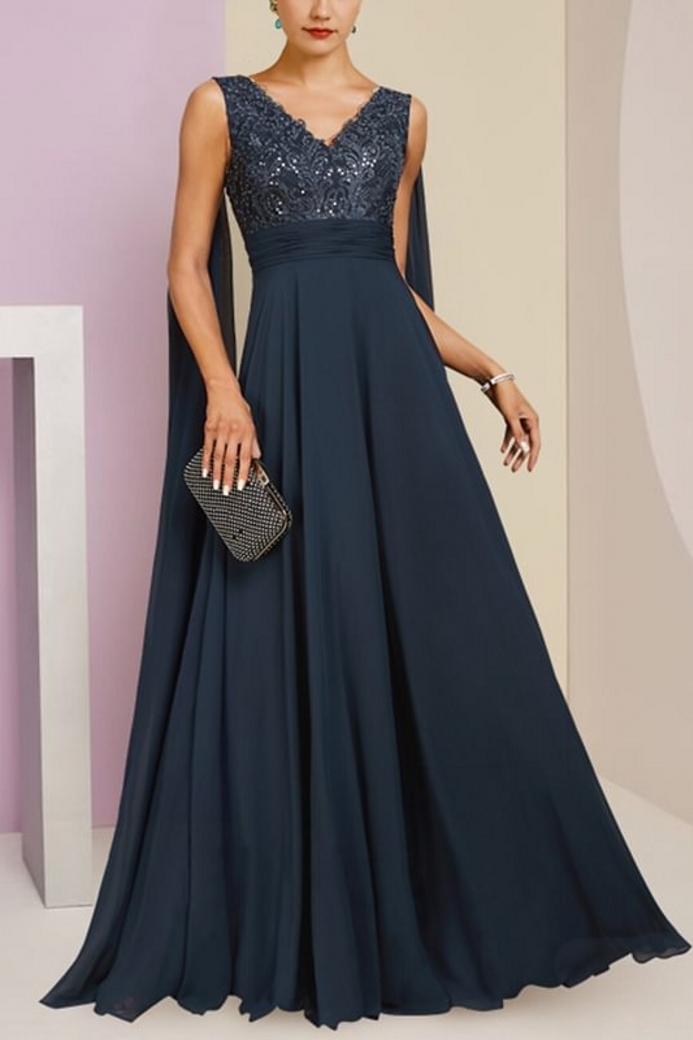
Dark blue mother-of-the-bride dress – Observe the hip width as well.
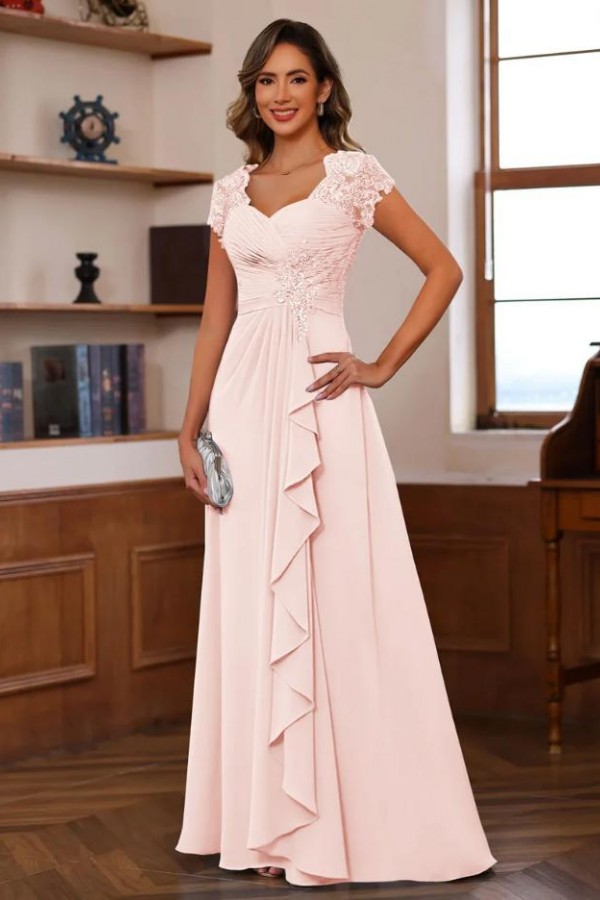

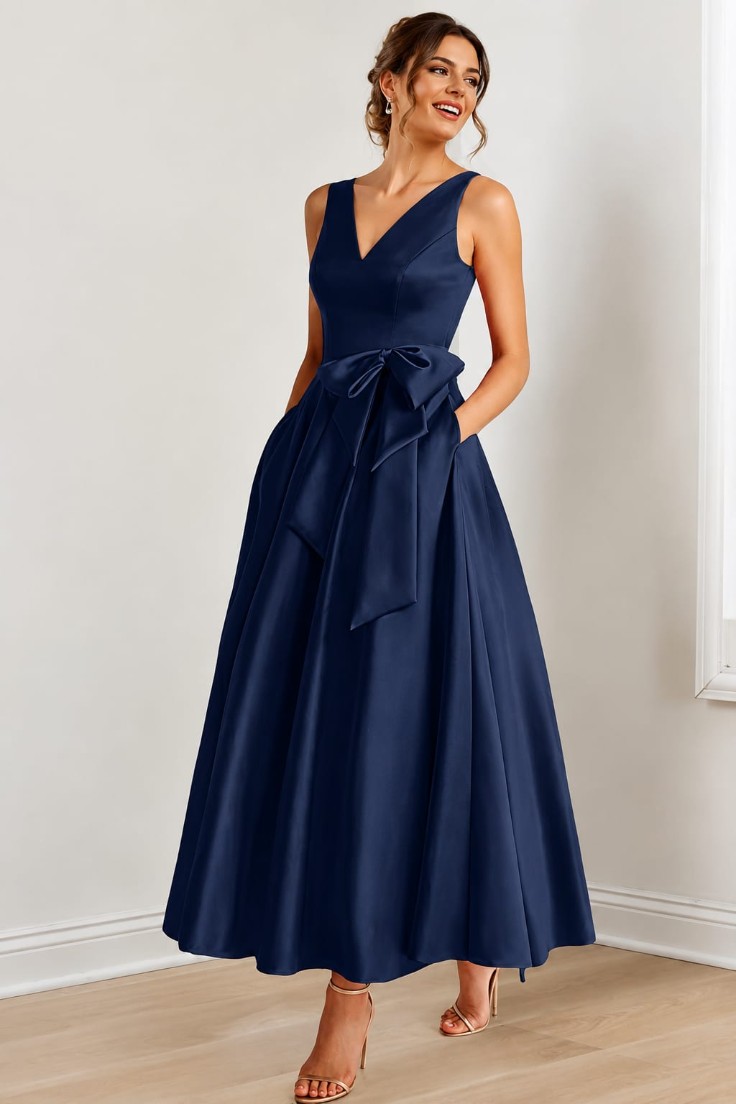
Pink mother-of-the-bride dress with jacket – Check where the fullness begins.
Golden lace dress – Carefully check the sitting folds.
Mother-of-the-bride dress with sleeves – Test the hem when standing up.
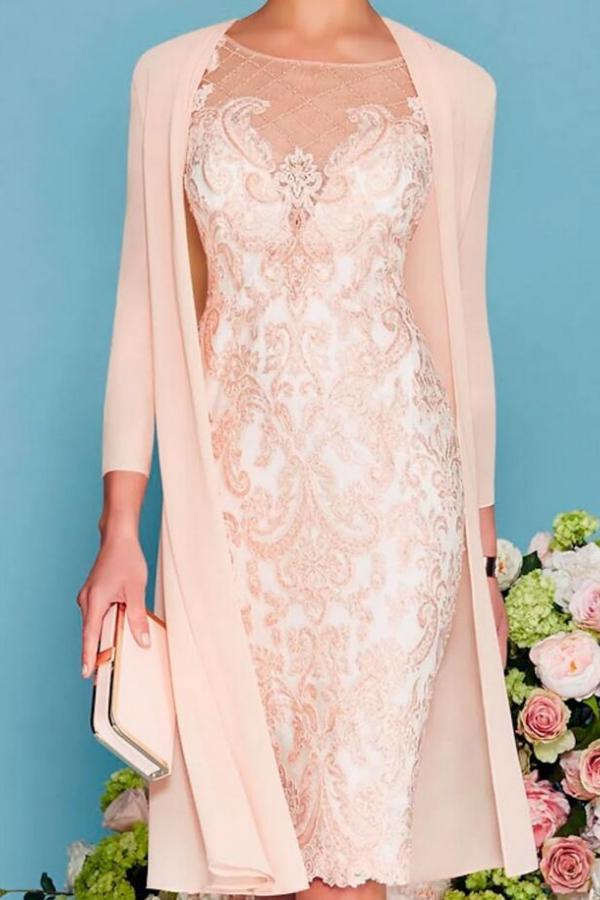
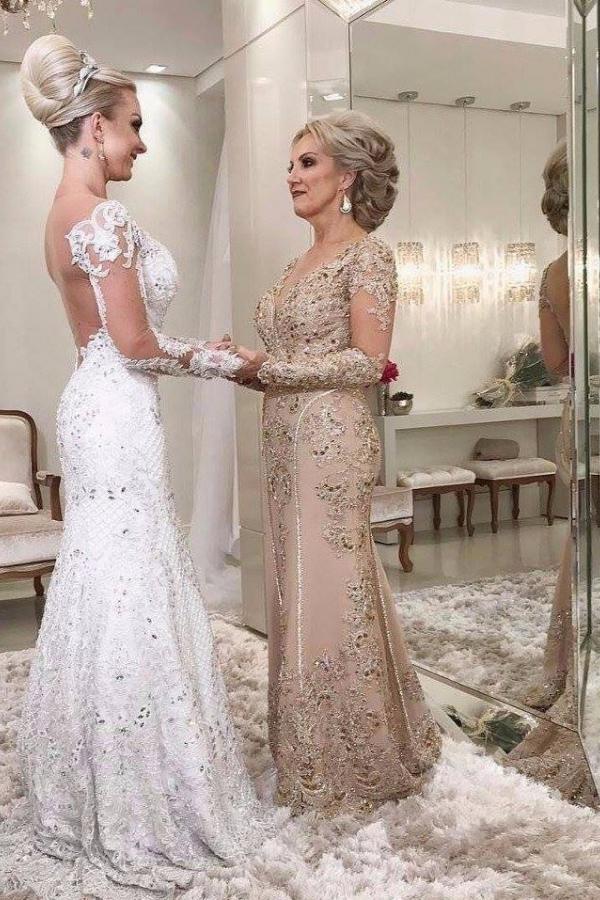
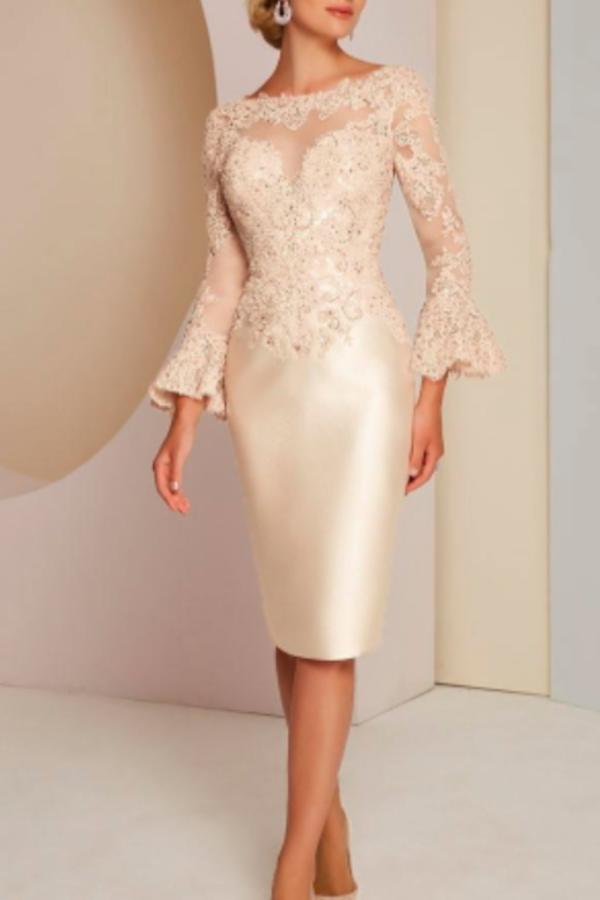
Find the full selection at mother-of-the-bride dresses.
Find the complete collection at Babyonlinedress.de.
Once the cut has been narrowed down, the article on choosing the color of a mother-of-the-bride dress will help with the rest of the selection.
Frequently asked questions
Is an A-line always more comfortable than a straight skirt shape?
An A-line is not automatically the more comfortable choice. What matters is the position and width at the waist and hips, as well as the space in the inner skirt layer.
Which folds are normal when sitting?
Soft folds caused by bending at the hips are normal. Strong, taut lines and a skirt that continually rides up should be examined more closely.
Should you automatically choose a larger size for greater comfort?
Automatically choosing a larger size does not solve every sitting problem. Compare the garment measurements and check whether the tension is caused by the width, seam placement, or cut.
Why is the lining important for sitting comfort?
The lining can restrict the available range of movement more than the visible outer fabric. Therefore, observe both layers separately when sitting down and standing back up.
How can you check the right length at the table?
Test the length with the planned shoes while sitting and standing up. The hem should not slip unnoticed beneath the sole of your shoe.
Where should you begin when comparing different skirt shapes?
Begin your selection of mother-of-the-bride dresses with one straighter and one flared style. Then check the waist, hips, inner layer, and hem of each model using the same process.
About the author
Lisa Müller writes for babyonlinedress about bridalwear, eveningwear, and fit. The focus is on making informed decisions about the cut, fabric, and fit of formal attire.