
You can recognize good lace by three things: a pattern without visible repetition at intervals of a few centimeters, neatly finished edges, and a backing that does not show through.
Cheap lace often reveals itself in the product photo – through the evenly repeated pattern and edges that appear simply cut.
The most important information at a glance
| feature | Good top | Cheap lace |
| Muster | Irregular, organic | Close, visible grid |
| Sides | The motif follows the edge. | Just cut off |
| Subsoil | Opaque lined | Food is missing or appears to be missing. |
| Handle | Soft, falls with | Stiff, it scratches the skin |
Branding rules:Start searching 4 to 6 weeks before the event and allow 2 to 3 weeks for changes. For formal dresses, shortening takes longer than for smooth fabrics because the hem needs to be finished by hand.
How can you recognize good lace?
The pattern is the first signal
High-quality lace has a pattern that only repeats after a larger area and appears irregular – flowers of different sizes, vines that do not run exactly parallel. The eye perceives this as handcrafted, even without knowing why.
Cheap lace works with a tight grid that repeats identically every few centimeters. You can see this in product photos when you zoom in and scan the area with your eyes.
The edge reveals the workmanship.
With a good tip, the edge follows the motif: petals and tendrils form the border, there is no straight cutting line. This is best seen at the neckline and sleeve hem.
If the tip is cut across the pattern and hemmed with a seam, material has been saved. This is not automatically bad, but it significantly changes the effect.
How the tip sits on the ground
The applied lace on a colored underlay looks three-dimensional and high-quality when the applications are sewn on individually. However, if the lace is laid out as a continuous strip on the lining, it creates a flat impression.
A good indicator is the area at the waist and seam: if the pattern continues there, it was crafted carefully. If it breaks at the seam, it was done quickly.
The grip test
Good lace feels soft and drapes well with the dress. Stiff, slightly scratchy lace usually contains a high proportion of synthetic fibers with a coarse texture – you will notice this on your arms and décolletage after two hours.
When purchasing online, the material specification replaces this test. A proportion of cotton or viscose indicates a soft feel, while pure polyester with a high thread density suggests a firmer structure. Both can be of high quality – they just feel completely different.
What types of tops are there?
Chantilly – fine and flowing
Chantilly lace is thin, soft, and features fine floral motifs on a delicate net. It drapes well with the fabric, making it suitable for slim cuts and flowing dresses.
For sleeves, it is the most comfortable choice because it adds hardly any bulk and adapts to arm movement.
Guipure – plastic and firm
Guipure, often referred to as lace, comes without a net base: the motifs are directly connected to each other. The result is firmer, more three-dimensional, and gives a dress structure.
It is suitable for sheath dresses and everything that should hold its shape – for flowing cuts, however, it is too stiff.
Tulle lace with appliqué
Here, individual lace motifs are applied to tulle, often in varying densities. This variant appears the most elaborate because the motifs can be distributed across the surface – denser at the bodice and more airy towards the hem.
When it comes to wedding dresses and boho styles, this is the most common design; more about this in our post onBoho wedding dress.
Which one is suitable for which occasion
Chantilly appears understated and is suitable for occasions where the dress should not take center stage. Guipure makes a more pronounced statement and works well for receptions and smaller celebrations. Tulle lace with appliqué is the most festive of the three.
As a wedding guest, you will be safest with Chantilly. Elaborate appliqué lace is visually close to bridal fashion and therefore attracts more attention than intended on this day.
What is important when wearing and caring for it?
The lining determines the comfort.
The most important quality point in lace dresses is not the lace itself, but the lining underneath. A well-processed inner lining prevents the lace structure from rubbing against the skin and makes the dress opaque.
What to generally pay attention to with textiles summarizes theConsumer advice center in its material guidelinestogether – Care label and fiber composition often say more than the product description.
Lace and skin: what causes itching
Scratches usually occur in three places: on the inside of the sleeves, at the back closure, and at the waist seam. Check these areas specifically during the fitting by raising your arms and turning around once.
If only the sleeves are uncomfortable, a skin-colored, thin undershirt under the dress helps – it is invisible from the outside and completely solves the problem.
After-dinner care
Delicate dresses do not belong in the washing machine. Airing them out, spot cleaning, and storing them hanging preserves their structure for years. A garment bag additionally prevents designs from snagging on neighboring pieces.
Never iron lace directly: A cloth in between and low temperature prevent the fibers from shining or sticking together.
What lace does to the silhouette
Lace with a dense pattern draws attention to the area where it sits. At the top, it emphasizes the shoulder line, and at the waist, it highlights the center. Those who want to keep a certain area calmer should choose smooth fabric there and place the lace elsewhere.
The color combination also plays a role. Lace in the same color as the underlay creates a calm effect and elongates the line, while a contrast between light lace and dark lining emphasizes each individual motif – and thus also the body part underneath.
Why the lining is part of the product information at babyonlinedress
In evening gowns, the inner side determines the evening. A dress that looks identical in the photo can feel completely different depending on the lining – and this difference is exactly what you can't see online.
We work with high-end models, which is why we use continuous lining and provide specific measurements for bust, waist, and hips for each item, instead of just stating a clothing size. In EU sizes from 34 to 46, you can choose based on measured values.
When it comes to lace sleeves, it's also worth considering the arm length. Lace has less stretch than jersey, which is why a sleeve that is too short will pull immediately when lifting.
Suitable dresses from our shop
Six top models across the three Machart families – from fine and flowing to plastic and structured.
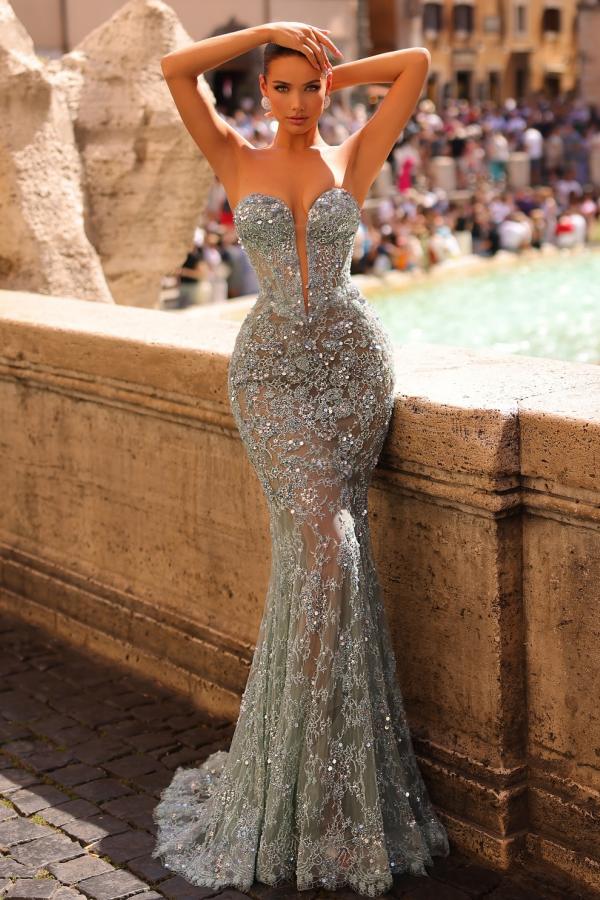
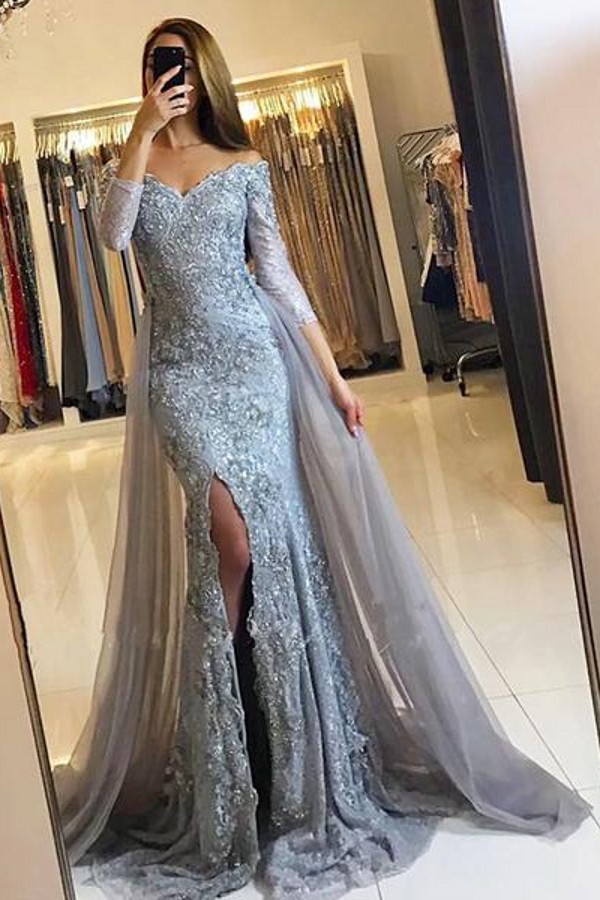
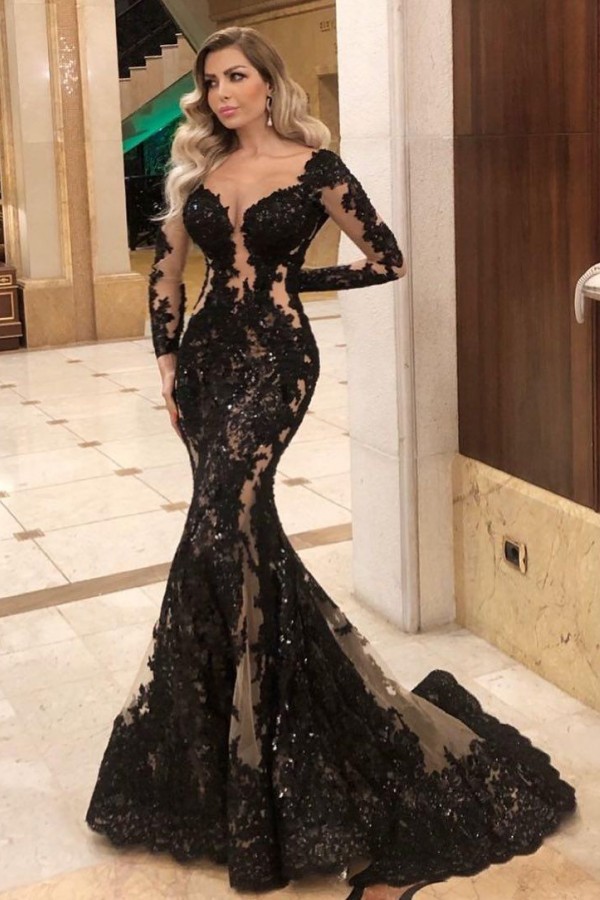
Long lace dress with glitter– Lace with a subtle sheen, for special occasions.
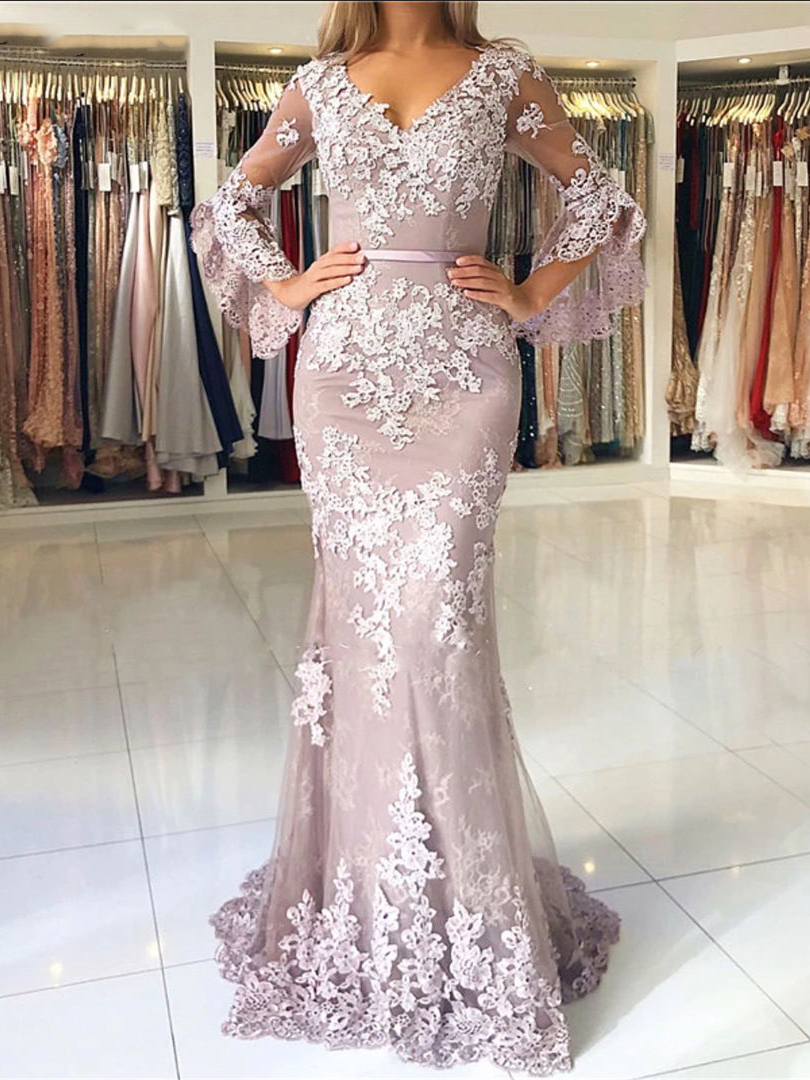
Lace dress with floral pattern- irregular pattern, cleanly worked edge.
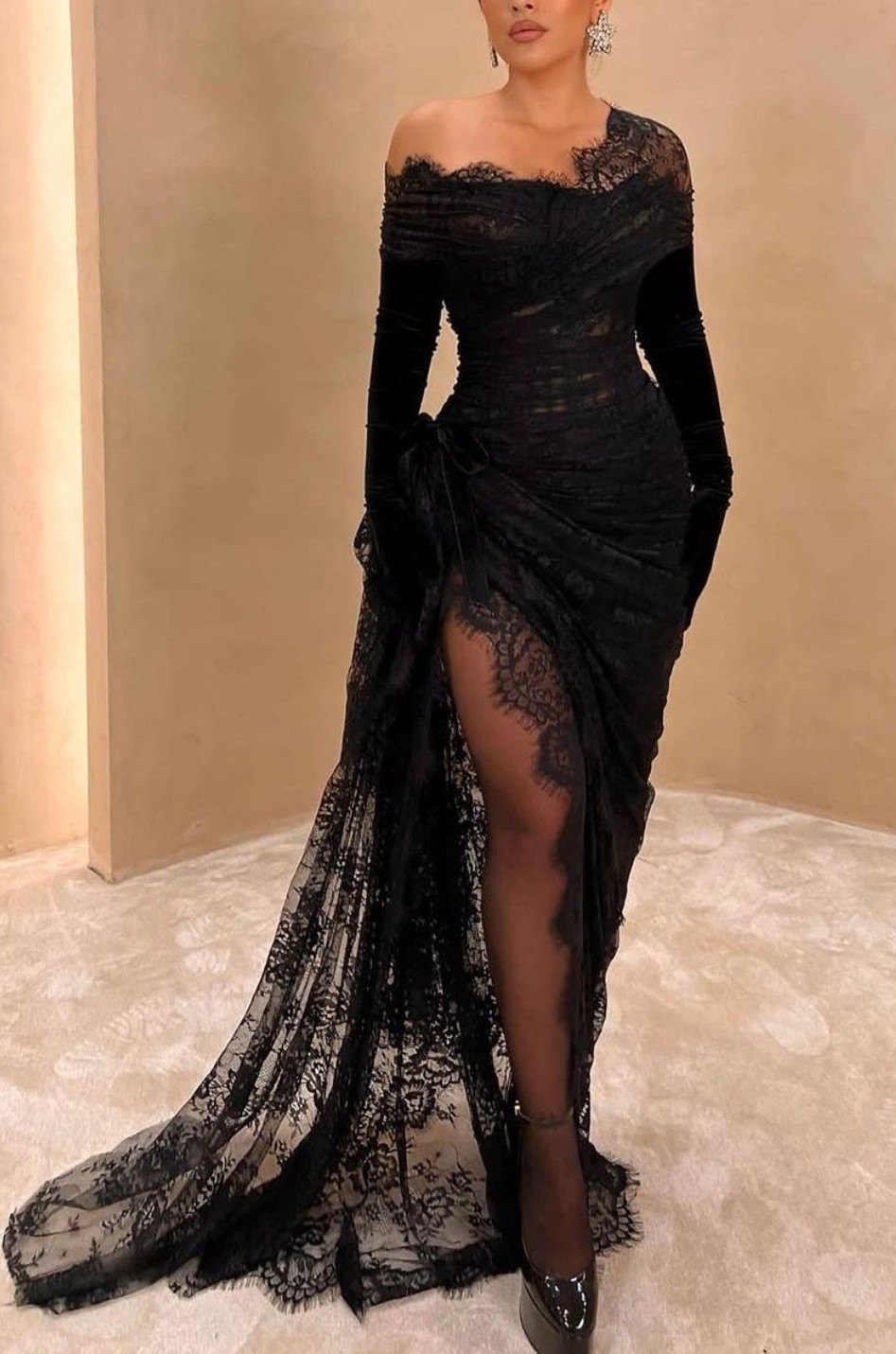
Black lace dress with sleeves- the most discreet variant, portable everywhere.


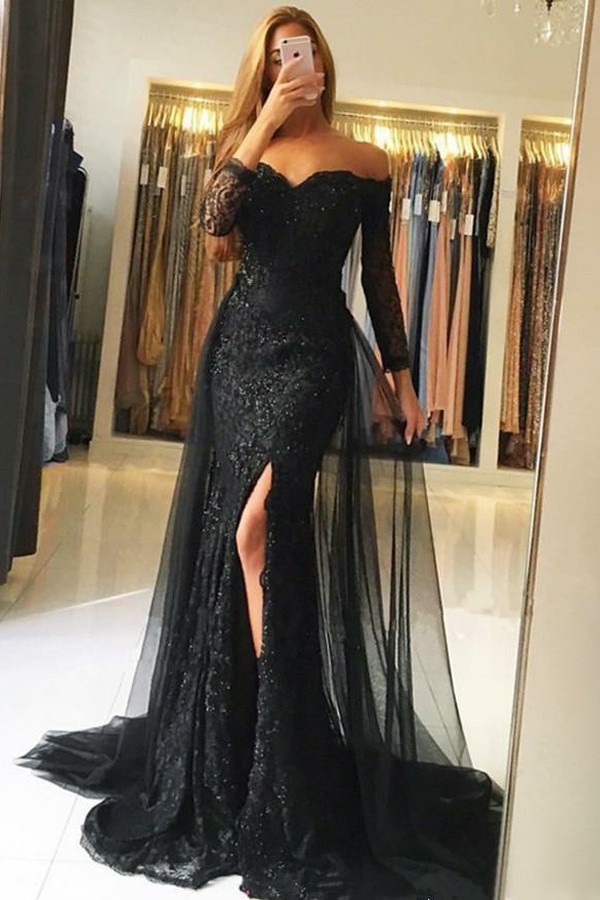
Black dress with lace sleeves– Chantilly character, falls softly with.
Modern lace dress in black– clear lines, lace as an accent on the top.
Sheath dress with firm lace– Guipure character, holds its shape.

You can find the full selection atLace dressesThere are calmer models without a point in simple evening dresses.
You can find the complete product range onBabyonlinedress.de.
Frequently Asked Questions
How can I recognize high-quality lace?
An irregular pattern that only repeats after a larger area, and edges that follow the motif instead of being cut straight. An opaque lining is also included.
What is the difference between Chantilly and Guipure?
Chantilly is fine, soft, and drapes with the fabric, while Guipure comes without a net base and is noticeably firmer. Chantilly suits flowing cuts, while Guipure is suitable for structured designs.
Why do some laces scratch?
It usually contains a high proportion of coarse synthetic fibers or lacks lining. A thin skin-colored undershirt solves the problem if only the sleeves are bothersome.
Can you wash lace dresses?
Not in the machine. Ventilate, clean selectively, and store hanging to maintain the structure; always place a cloth in between when ironing.
Does a lace top make the skin appear narrower or wider?
The lace draws the eye to the place where it sits. If someone wants to keep a part calmer, they choose smooth fabric there and use the lace in another place.
Where can I find lace dresses in my size?
A good start is provided by our selection of top dresses in EU sizes from 34 to 46. For each model, the measurements for bust, waist, and hips are provided.
About the author
Lisa Müller has been writing about bridal fashion, evening wear, and festive occasions for several years, focusing primarily on fit, silhouettes, and fabric knowledge. Her emphasis is on how cut, material, and tailoring make a dress look in real life – not just in the product photo.



-(1)-conew1.jpg?w=600&h=900)
-conew1.jpg?w=600&h=900)
-conew1-12.jpg?w=600&h=900)
-conew1-13.jpg?w=600&h=900)